What must go on the tag?
The one thing that matters is a current phone number, ideally two. Without it the tag does nothing. Add a short line like “call me, I'm lost”, because it nudges the finder to act. Everything else, name included, is optional and depends on how much you want to reveal.
Give a number you actually answer. If there's room, add a second one, say a housemate's, in case you're out of signal. The stranger holding your dog by a busy road won't try ten times.
Your pet's name sounds friendly and helps calm the animal, but some owners deliberately leave it off. A stranger who can call the dog by name finds it easier to coax him over. Your call, not a rule.
What's best left off a permanent engraving?
Skip your full home address and surname on the metal. An address on the collar is a liability, since collar and keys can go missing together, and a surname makes your home easy to trace. A phone number alone is plenty to reach you, without revealing where you live.
Don't engrave details that go stale fast either. An old engraved number is worse than none, because the finder calls a dead line. With a classic plate, every change of details means buying a new tag.
Health notes such as “on medication” or “nervous with strangers” are valuable, but they won't fit on a small plate. Keep them where you have space and can edit them.
How much information is actually enough?
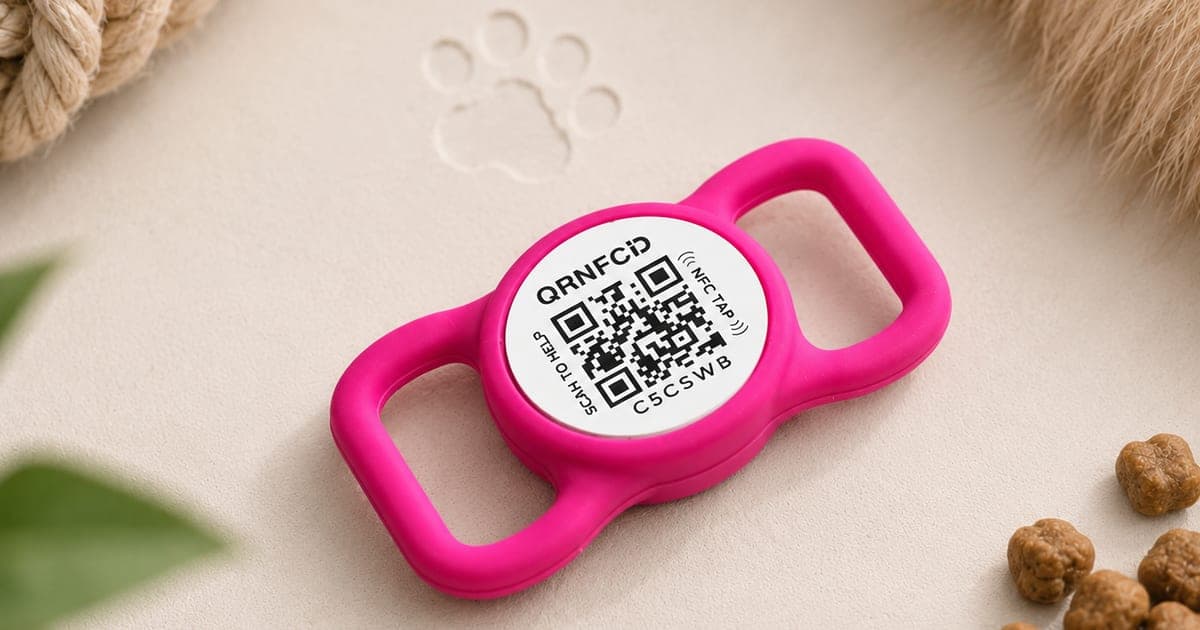
Just enough for the finder to call, and not a word more on the metal itself. The tidiest setup keeps a bare minimum on the tag and all the detail in an editable profile behind a QR code. You change the number, flip on a “lost” status, add health notes, and never swap the tag.
A reward is easier to promise in the profile than to engrave in metal. A short “reward for finding” can motivate, and once your pet is home you simply delete it. On an engraving it would stay forever.
With a smart QR and NFC tag, the metal carries only the code while the details live in a profile you fix in a minute. If you're weighing up which tag to get, see our guide on what to look for when choosing a tag.